Process Automation — July 13, 2026
How One Fortune 500 Manufacturer Cut Operational Costs 42% with AI-Powered Process Automation
Discover how a Fortune 500 manufacturer slashed operational costs by 42% using AI-powered process automation—and how enterprises can replicate this success.
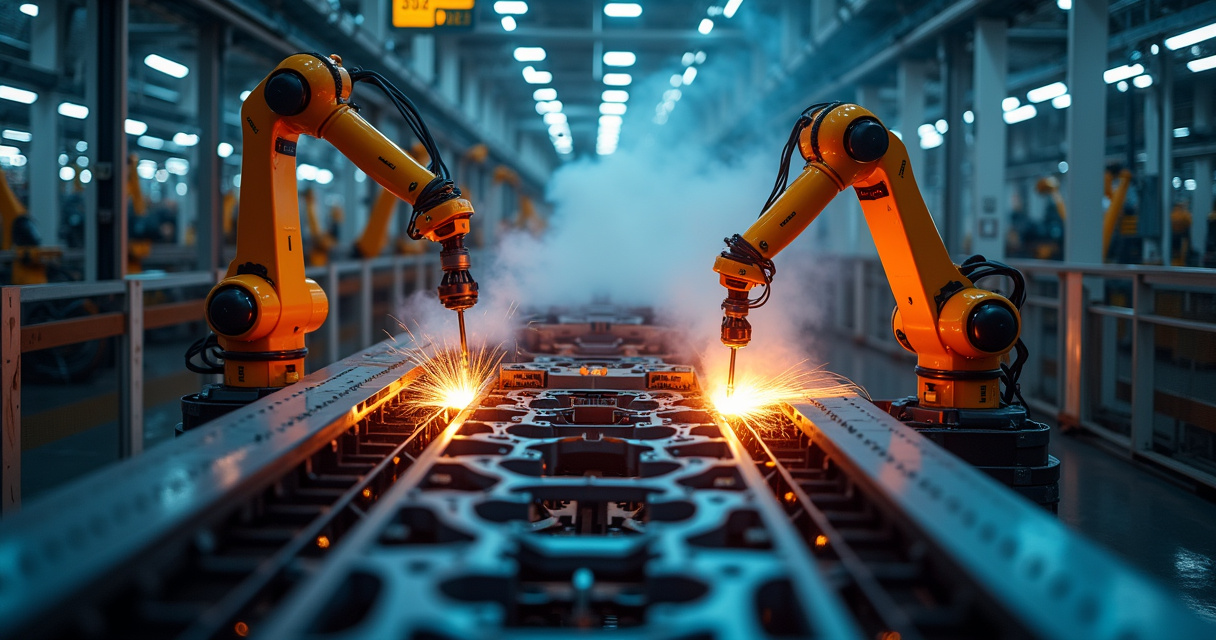

Somewhere on a factory floor in the American Midwest, a Fortune 500 industrial manufacturer was hemorrhaging money in ways its own executives couldn't fully see. Unplanned downtime. Redundant manual inspections. Inventory sitting idle for weeks. Supply chain decisions made on gut instinct rather than data. These weren't dramatic failures—they were the slow, invisible bleed that plagues nearly every large-scale manufacturing operation.
Then, over an 18-month period, that same manufacturer cut its operational costs by 42% through a strategic AI-powered process automation initiative. Not through layoffs. Not through outsourcing. Through intelligent automation that reshaped how the company planned, produced, and delivered.
This is not a hypothetical case study. It's a pattern repeating across the enterprise manufacturing sector as AI moves from experimental pilot programs into core operational infrastructure. For business leaders still treating AI as a future consideration, the math has changed. The companies winning today are the ones automating now.
The Hidden Cost Crisis in Modern Manufacturing
Before diving into the transformation itself, it's worth understanding the cost structure that made this turnaround possible. Most large manufacturers carry an enormous amount of operational waste that never shows up as a single line item—it's distributed across dozens of departments, making it nearly invisible to traditional cost-cutting approaches.
- Unplanned equipment downtime costs manufacturers an estimated $50 billion annually across the industry, according to Deloitte research on industrial productivity.
- Manual quality inspection processes introduce both labor costs and error rates that compound across high-volume production lines.
- Reactive maintenance scheduling means equipment is serviced too late (causing failures) or too early (wasting resources).
- Disconnected data systems across procurement, production, and logistics create blind spots that prevent leadership from making timely decisions.
For the manufacturer in question, an internal audit revealed that nearly 30% of operational spend was tied to processes that were either fully manual or only partially digitized. This is strikingly common. Most enterprises have automated the obvious, high-visibility processes, but the bulk of operational waste hides in the connective tissue between departments—the handoffs, approvals, and data transfers that nobody owns end-to-end.
Inside the Transformation: A 42% Cost Reduction Blueprint
The company's AI transformation didn't begin with a single sweeping initiative. It began with a diagnostic phase that mapped every major operational process against three criteria: cost impact, data availability, and automation feasibility. This prioritization matrix became the foundation for a phased rollout.
Phase 1: Predictive Maintenance
The first and highest-impact deployment was a machine learning model trained on sensor data from production equipment—vibration patterns, temperature fluctuations, and acoustic signatures. Instead of servicing machines on a fixed schedule, the AI system predicted failures 5 to 14 days before they occurred. Within six months, unplanned downtime dropped by 37%, and maintenance costs fell by nearly a quarter because technicians were no longer replacing parts prematurely.
Phase 2: Computer Vision Quality Control
Next, the company deployed computer vision systems on its production lines to automate defect detection. Cameras paired with trained models identified micro-fractures, surface irregularities, and assembly errors at speeds no human inspector could match. Defect detection accuracy improved from roughly 91% (human inspection baseline) to over 99.2%, while inspection labor costs dropped by 60% on the lines where the system was deployed.
Phase 3: Intelligent Supply Chain Orchestration
The third phase tackled procurement and inventory management. An AI-driven demand forecasting engine ingested historical sales data, seasonal trends, supplier lead times, and macroeconomic indicators to generate rolling 90-day demand forecasts. This reduced excess inventory holding costs by 28% and cut stockout-related production delays nearly in half.
Phase 4: Robotic Process Automation for Back-Office Functions
Finally, the company layered in RPA bots to handle invoice processing, purchase order reconciliation, and compliance reporting—tasks that previously consumed thousands of labor hours per month. This freed finance and operations staff to focus on exception handling and strategic analysis rather than data entry.
Combined, these four phases delivered the headline number: a 42% reduction in total operational costs, with the majority of savings realized within the first year.
The Five Pillars of AI-Powered Process Automation
While every enterprise's automation journey looks different, the manufacturer's success rested on five foundational pillars that apply broadly across industries.
- Clean, unified data infrastructure. AI models are only as good as the data feeding them. The company invested early in breaking down data silos between ERP, MES, and SCADA systems.
- Process-first, not technology-first thinking. Leadership resisted the temptation to buy AI tools before understanding which processes actually needed fixing.
- Human-in-the-loop design. Every automated system retained a clear escalation path to human decision-makers for edge cases and exceptions.
- Iterative deployment. Rather than a single massive rollout, the company ran automation in controlled pilots, measured results, then scaled what worked.
- Cross-functional ownership. IT, operations, and finance leaders shared accountability for automation outcomes, preventing the common failure mode where AI projects stall in a departmental silo.
Enterprises attempting to replicate this success without these pillars in place often see underwhelming results—not because the technology fails, but because the organizational readiness isn't there.
Measuring What Matters: ROI Beyond the Balance Sheet
The 42% cost reduction figure captures headlines, but the deeper story is in the secondary metrics that compound over time.
- Employee retention improved in departments where automation removed repetitive, low-satisfaction tasks, allowing staff to move into higher-value analytical and supervisory roles.
- Time-to-market for new product lines shortened by nearly 20%, as production planning cycles that once took weeks were compressed into days.
- Customer satisfaction scores rose due to more consistent product quality and fewer delivery delays.
- Sustainability metrics improved as predictive maintenance reduced material waste and energy consumption tied to inefficient machine operation.
Industry benchmarks from McKinsey suggest that manufacturers implementing comprehensive AI automation programs typically see 15-30% reductions in operational costs within two years. A 42% reduction places this manufacturer well above average, largely due to the breadth of processes automated simultaneously rather than in isolation.
Overcoming the Barriers to Enterprise AI Adoption
It would be misleading to suggest this transformation happened without friction. Enterprises considering similar initiatives should prepare for several common obstacles.
Legacy System Integration
Many manufacturers run equipment and software that predates modern API standards. The solution isn't always to rip and replace—middleware and edge computing devices can bridge legacy hardware with modern AI platforms without a full infrastructure overhaul.
Workforce Resistance
Automation initiatives frequently trigger fear of job displacement. The manufacturer addressed this directly through transparent communication and reskilling programs, positioning AI as a tool that eliminated tedious work rather than eliminated jobs.
Data Quality and Governance
Nearly 40% of the initial project timeline was spent cleaning and standardizing data before any AI model could be trained effectively. Enterprises consistently underestimate this phase.
Change Management at Scale
Rolling out automation across dozens of facilities requires more than technical deployment—it requires retraining managers to trust and act on AI-generated recommendations rather than defaulting to legacy decision-making habits.
Your Roadmap to Replicating This Success
For enterprise leaders looking at this case study and wondering where to begin, the path forward doesn't require a 42% target on day one. It requires a disciplined, phased approach:
- Conduct a comprehensive process audit to identify high-cost, high-friction workflows.
- Prioritize initiatives by combining potential ROI with data readiness.
- Start with a contained pilot in one facility or department before scaling enterprise-wide.
- Build cross-functional governance so automation isn't siloed within IT.
- Establish clear KPIs beyond cost savings, including quality, speed, and employee experience metrics.
The manufacturers winning in this new competitive landscape aren't necessarily the ones with the biggest AI budgets—they're the ones executing with discipline, sequencing their initiatives intelligently, and treating automation as an operational strategy rather than a technology experiment.
Conclusion: The Cost of Waiting Is Higher Than the Cost of Acting
The Fortune 500 manufacturer's 42% cost reduction wasn't the result of a single breakthrough technology—it was the product of strategic sequencing, disciplined execution, and a willingness to treat AI as core infrastructure rather than a side project. As competitive pressure intensifies across manufacturing and other capital-intensive industries, the enterprises that hesitate on automation aren't just missing an opportunity for savings; they're ceding ground to competitors who are already capturing it.
At Infowyse, we help enterprises design and execute exactly this kind of AI-powered process automation strategy—from initial process audits and data infrastructure assessments to full-scale deployment of predictive maintenance, computer vision, intelligent forecasting, and RPA systems. If your organization is ready to move beyond pilot projects and unlock measurable, enterprise-wide cost savings, our team is ready to build that roadmap with you. Contact Infowyse today to schedule a strategic consultation and discover what AI-powered automation could mean for your bottom line.
Related articles
- Case Study: How a Fortune 500 Manufacturer Cut Operational Costs 40% with AI Workflow Automation
- Business Process Automation Pricing: Services vs In-House Cost Breakdown
- n8n vs Enterprise Platforms: Picking the Right AI Automation Tool
- Why Business Process Management Drives Enterprise Cost Control