Process Automation — July 31, 2026
How a Retailer Cut Order Errors 42% With AI Automation
Discover how one national retailer used AI automation to slash order errors by 42%, cut costs, and boost customer trust — and what it means for your business.
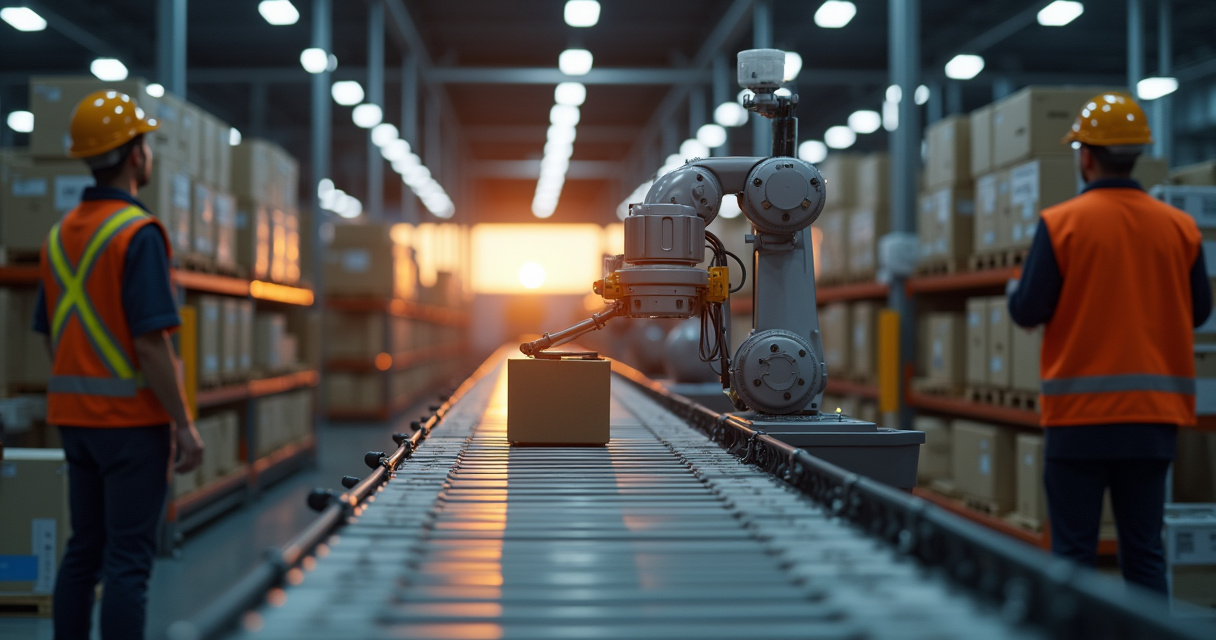
▶ Watch: How a Retailer Cut Order Errors 42% With AI Automation (video)

Every retailer knows the sinking feeling of a customer complaint that begins with, “This isn’t what I ordered.” It’s a small sentence with an outsized cost — refunds, return shipping, lost loyalty, and in aggregate, millions of dollars in wasted operational spend. For one mid-sized national retailer operating dozens of distribution centers, order errors had become a quiet but persistent drain on profitability. Then, within a single fiscal year, that retailer cut order errors by 42% — not through more staff or stricter manual checks, but through targeted AI automation woven directly into its fulfillment workflow.
This is the story of how that transformation happened, what technology made it possible, and what any enterprise leader can learn from it. It’s also a case study in a broader truth we see across industries at Infowyse: the biggest operational wins rarely come from replacing people with robots. They come from removing the friction, guesswork, and manual handoffs that cause mistakes in the first place.
The Hidden Cost of Order Errors in Retail
Order errors are often treated as a customer service inconvenience rather than a strategic problem. But the math tells a different story. Industry research consistently shows that the average cost of correcting a single mis-shipped or mis-picked order — including return logistics, replacement shipping, customer service time, and lost future revenue from a dissatisfied buyer — can range from $15 to $75 depending on product category and shipping distance.
For a retailer processing hundreds of thousands of orders per month, even a 3-4% error rate can translate into tens of thousands of defective transactions. Multiply that by the average resolution cost, and you’re looking at millions of dollars annually, not to mention the reputational damage that shows up in reviews, return customers, and brand trust scores.
The retailer in this case study was experiencing an error rate hovering around 6.8% across its most complex SKU categories — apparel with multiple size and color variants, electronics with bundled accessories, and seasonal promotional items with frequently shifting inventory codes. Executives had tried the usual fixes: additional quality control checkpoints, more rigorous employee training, and manual double-checks before shipment. Each intervention nudged the error rate down marginally but added labor costs and slowed fulfillment speed. It became clear that the problem wasn’t effort — it was process design.
Where the Errors Were Coming From
Before any automation could be deployed, the retailer partnered with an AI automation team to conduct a full diagnostic of its order lifecycle, from the moment a customer clicked “buy” to the moment a package left the warehouse. This diagnostic phase is often the most underrated step in enterprise AI projects — you cannot automate your way out of a problem you haven’t mapped.
The audit revealed several recurring failure points:
- Manual SKU matching: Warehouse staff were cross-referencing product codes by eye against printed pick lists, which were prone to transcription errors, especially for visually similar SKUs.
- Inventory location drift: Products were sometimes shelved in incorrect bins after restocking, so pickers grabbed the wrong item even when following instructions correctly.
- Order bundling complexity: Multi-item orders with add-ons or promotional bundles had inconsistent packing instructions that varied by shift and by warehouse.
- Late-stage data entry errors: Customer service representatives manually editing orders for address changes or item swaps introduced a secondary layer of human error.
None of these were failures of effort. They were failures of a system that relied too heavily on human short-term memory, manual data entry, and static instructions in a highly dynamic environment. This is precisely the kind of scenario where workflow automation delivers outsized returns — not by removing people, but by removing the moments where human error is most likely to creep in.
Building the AI Automation Solution
The retailer’s AI automation partner designed a layered solution rather than a single tool. Three components worked together to attack the error sources identified in the diagnostic phase.
1. Computer Vision-Based Pick Verification
Cameras mounted at pick stations used computer vision models trained to recognize SKUs in real time. As a worker picked an item, the system instantly verified it against the order requirement and flagged mismatches before the item ever reached the packing station. This single change addressed the largest share of errors tied to manual SKU matching.
2. Predictive Inventory Location Intelligence
Rather than relying on static bin assignments, a machine learning model continuously tracked inventory movement patterns and flagged discrepancies between expected and actual shelf locations. When drift occurred, the system automatically triggered a re-verification task rather than letting a picker unknowingly grab the wrong product.
3. Intelligent Order Orchestration
For complex bundled orders, an AI orchestration layer generated dynamic, order-specific packing instructions instead of relying on generic printed sheets. This system pulled from real-time promotional data, so a bundle created for a flash sale automatically produced the correct packing sequence without waiting on a manual update from merchandising teams.
Crucially, these systems didn’t operate in isolation. They were connected through a central automation layer that gave supply chain managers a live view of error trends, bottlenecks, and exception cases — turning what used to be a reactive quality control function into a proactive, data-driven operation. Retailers evaluating similar upgrades often benefit from reviewing case studies of comparable deployments before committing to a specific architecture, since fulfillment complexity varies significantly by product category and warehouse layout.
The Results: A 42% Drop in Order Errors
Within six months of full deployment, the retailer’s order error rate fell from 6.8% to roughly 3.9% — a 42% relative reduction. The impact showed up across multiple business metrics, not just the headline error rate:
- Customer service ticket volume related to incorrect shipments dropped by 37%, freeing support staff to focus on higher-value interactions.
- Return shipping costs fell by an estimated 29%, directly improving fulfillment margins.
- Average order processing time decreased by 11%, since fewer orders required manual rework or exception handling.
- Customer satisfaction scores tied to delivery accuracy rose measurably, contributing to improved repeat purchase rates in the following two quarters.
Perhaps most notably, the retailer didn’t need to increase headcount to achieve these results. Existing staff simply worked within a system designed to catch mistakes before they became costly. This is a pattern we see repeatedly in enterprise AI deployments: the ROI isn’t just in labor savings, it’s in error prevention, speed, and the compounding trust that accurate service builds with customers over time.
Lessons for Any Retailer Considering AI Automation
Not every retailer has the same warehouse footprint or SKU complexity, but the underlying lessons from this transformation apply broadly across the industry.
Start With Diagnosis, Not Technology
The retailer’s success hinged on identifying exactly where errors originated before selecting tools. Businesses that skip this step often deploy AI solutions that automate the wrong part of the process, yielding disappointing results and eroding internal confidence in future AI investments.
Layer Automation Rather Than Replacing Entire Systems
Rather than ripping out existing warehouse management systems, the retailer layered computer vision, predictive analytics, and orchestration tools on top of existing infrastructure. This reduced implementation risk and allowed for faster time-to-value.
Treat Data as a Living Asset
Static instructions and printed pick lists were a major error source precisely because they couldn’t adapt to real-time changes. Any enterprise serious about reducing operational errors should evaluate where static, manually updated processes could instead be powered by AI-driven analytics that reflect current conditions rather than yesterday’s assumptions.
Measure Beyond the Obvious Metric
While the order error rate was the headline number, the real business case included customer service load, return logistics costs, and customer retention. Enterprises that only track the primary KPI often undersell the true ROI of automation projects to their boards and stakeholders.
What This Means for the Future of Retail Operations
Order accuracy might seem like an operational detail, but it sits at the intersection of customer experience, cost control, and brand reputation. As competition in retail intensifies and customer expectations around speed and accuracy continue to rise, the margin for manual error keeps shrinking. AI automation isn’t a futuristic add-on anymore — it’s becoming the baseline expectation for retailers who want to compete on reliability as much as price.
The retailer in this case study didn’t achieve a 42% reduction in order errors through a single dramatic overhaul. It happened through a deliberate, phased approach: diagnosing root causes, deploying targeted AI tools, and continuously measuring results against real business outcomes. That approach is repeatable, and it’s exactly the kind of engagement that separates successful AI initiatives from expensive experiments that never scale.
At Infowyse, we’ve seen this pattern play out across industries beyond retail as well — from customer support AI reducing resolution times, to automated workflows eliminating bottlenecks in logistics and finance. The common thread is always the same: precision automation applied to the right friction points delivers measurable, compounding returns.
If your organization is dealing with costly order errors, fulfillment bottlenecks, or manual processes that are quietly eating into margins, now is the time to act. Explore our full range of AI automation services to see how a tailored solution could transform your operations, or take the next step directly and book a consultation with our team at Infowyse to map out a strategy built around your specific business challenges.
Related articles
- How a Logistics Firm Cut Processing Time 73% With AI Agents
- RPA Alone Won't Scale: Why Enterprise Automation Needs a Governance-First Strategy
- Choosing Business Process Management Systems for Scale: A Senior Enterprise AI Perspective
- Choosing Business Process Management Systems: A Buyer's Framework